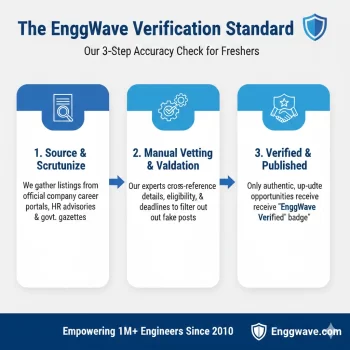

At Enggwave, we publish verified private engineering recruitment notifications from leading companies across India. This page serves as a central resource where you can discover the latest engineering jobs, understand eligibility requirements, explore salary expectations, and find direct application links to company recruitment portals.
Latest Private Engineering Jobs
Private companies recruit engineers throughout the year based on business growth, project requirements, campus hiring, off-campus recruitment, expansion plans, and replacement hiring. Unlike many government organizations that recruit once or twice a year, private companies announce vacancies regularly, providing continuous opportunities for engineering graduates.
Recruitment may be conducted through campus placements, off-campus drives, online applications, employee referrals, walk-in interviews, hiring events, or company career portals. Candidates should regularly monitor recruitment notifications and apply early to maximize their chances of selection.
| Company | Popular Engineering Roles | Qualification |
|---|---|---|
| TCS | Software Engineer, System Engineer | BE / B.Tech / ME / M.Tech / MCA |
| Infosys | Systems Engineer, Digital Specialist | BE / B.Tech / MCA |
| Bosch | Graduate Engineer Trainee, Design Engineer | BE / B.Tech |
| Siemens | Project Engineer, Automation Engineer | BE / B.Tech |
| Honeywell | Embedded Engineer, Systems Engineer | BE / B.Tech / ME |
| Intel | Software Engineer, Hardware Engineer | BE / B.Tech / M.Tech |
| Qualcomm | VLSI Engineer, Software Engineer | BE / B.Tech / M.Tech |
| L&T | Site Engineer, Project Engineer | BE / B.Tech / Diploma |
The table above lists common private engineering opportunities. Actual eligibility criteria, required skills, experience, and selection process vary between companies. Always read the official recruitment notification before applying.
Why Choose a Private Engineering Career?
Private companies offer engineers the opportunity to work on advanced technologies, innovative products, and large-scale industrial projects. Engineers gain practical experience, develop technical expertise, collaborate with global teams, and often work with modern tools and industry-leading software.
Many private organizations also provide faster promotions, performance-based salary growth, international assignments, professional certification programs, leadership training, and opportunities to specialize in emerging technologies.
Benefits of Private Engineering Jobs
- Competitive salary packages and annual increments.
- Performance-based promotions.
- Exposure to advanced technologies and innovation.
- Opportunities to work with global teams.
- Learning and certification programs.
- Career mobility across industries and roles.
- Flexible work options in many organizations.
- International career opportunities.
For engineers who enjoy solving technical challenges, learning new skills, and working in dynamic environments, the private sector provides excellent long-term career prospects.
Industries Hiring Engineers
Engineering graduates are employed across almost every major industry in India. While Information Technology remains one of the largest recruiters, demand for engineers continues to grow in manufacturing, infrastructure, renewable energy, defence, semiconductor manufacturing, electric vehicles, and industrial automation.
Information Technology (IT)
Software development, cloud computing, artificial intelligence, cybersecurity, DevOps, data engineering, and enterprise applications.
Manufacturing
Production engineering, quality assurance, maintenance, industrial automation, lean manufacturing, and process improvement.
Automotive & Electric Vehicles
Vehicle design, testing, manufacturing, embedded systems, battery technology, and automotive software development.
Electronics & Semiconductor
Chip design, embedded systems, PCB design, VLSI, hardware engineering, telecommunications, and electronic product development.
Construction & Infrastructure
Building construction, highways, metro rail, industrial projects, smart cities, and project management.
Renewable Energy
Solar power, wind energy, battery storage systems, green hydrogen, and sustainable engineering projects.
As new technologies emerge, engineers with strong technical knowledge and practical skills continue to remain in high demand across multiple industries.
Top Private Engineering Recruiters in India
India is home to thousands of engineering employers ranging from global technology companies to specialized manufacturing firms. These organizations recruit engineers through campus placements, off-campus drives, direct hiring, internships, and employee referral programs.
Many of these organizations recruit engineering graduates every year through structured hiring programs, making them excellent career options for freshers as well as experienced professionals.
Stay Updated with the Latest Private Engineering Jobs
Private companies announce engineering recruitment throughout the year. Bookmark this page and visit Enggwave regularly to stay updated with the latest MNC hiring, software engineering jobs, manufacturing recruitment, core engineering vacancies, off-campus drives, and walk-in interviews.
Private Engineering Jobs by Engineering Branch
Private companies recruit engineers from almost every engineering discipline. While Information Technology companies generally hire Computer Science, Information Technology, Electronics, and related graduates, manufacturing, automotive, energy, construction, and industrial companies recruit engineers from multiple branches depending on business requirements.
Selecting job opportunities that match your specialization and technical skills can improve your chances of securing interviews and building a successful long-term career.
Mechanical Engineering Jobs
Mechanical Engineers are recruited for product design, manufacturing, production, maintenance, HVAC, heavy engineering, industrial automation, oil & gas, renewable energy, and automotive industries.
Popular Roles: Design Engineer, Production Engineer, Maintenance Engineer, Project Engineer, Quality Engineer.
Civil Engineering Jobs
Civil Engineers are hired by construction companies, infrastructure developers, EPC contractors, metro rail projects, real estate firms, consulting companies, and industrial project organizations.
Popular Roles: Site Engineer, Planning Engineer, Structural Engineer, Quantity Surveyor, Project Engineer.
Electrical Engineering Jobs
Electrical Engineers work in power generation, renewable energy, industrial automation, manufacturing plants, electrical design, and transmission projects.
Popular Roles: Electrical Design Engineer, Maintenance Engineer, Testing Engineer, Project Engineer.
Electronics & Communication Engineering Jobs
Electronics graduates find opportunities in embedded systems, semiconductor companies, consumer electronics, telecommunications, automotive electronics, and defence manufacturing.
Popular Roles: Embedded Engineer, Hardware Engineer, VLSI Engineer, PCB Design Engineer.
Computer Science & IT Jobs
Computer Science graduates are among the highest recruiters in the private sector. Companies recruit software engineers for cloud computing, AI, cybersecurity, full-stack development, mobile applications, and enterprise software solutions.
Popular Roles: Software Engineer, Full Stack Developer, Data Engineer, AI Engineer, DevOps Engineer.
Chemical, Automobile & Other Branches
Chemical, Automobile, Instrumentation, Aerospace, Mining, Production, Metallurgical, and Industrial Engineering graduates also enjoy excellent opportunities in specialized industries and manufacturing organizations.
Private Engineering Jobs by Qualification
Engineering recruitment in the private sector is based on educational qualifications, technical skills, internship experience, certifications, and project knowledge. Opportunities are available for fresh graduates as well as experienced professionals.
| Qualification | Popular Private Sector Roles |
|---|---|
| BE / B.Tech | Graduate Engineer Trainee, Software Engineer, Design Engineer, Project Engineer |
| ME / M.Tech | Research Engineer, AI Engineer, Senior Design Engineer, Technical Specialist |
| Diploma Engineering | Diploma Engineer Trainee, Junior Engineer, Maintenance Engineer |
| ITI | Technician, Operator, Service Engineer, Maintenance Technician |
| MCA / MSc | Software Developer, Data Analyst, Cloud Engineer, System Engineer |
Many companies also value industry certifications, internships, live projects, and technical portfolios in addition to academic qualifications. Building practical experience through internships and personal projects can improve employability.
IT Jobs vs Core Engineering Jobs
Engineering graduates often face a common career decision: whether to pursue an IT job or continue in their core engineering discipline. Both options offer rewarding careers, but they differ in the type of work, required skills, career progression, and industry focus.
| IT Jobs | Core Engineering Jobs |
|---|---|
| Software Development | Manufacturing & Industrial Engineering |
| Cloud Computing | Automotive Engineering |
| Artificial Intelligence | Power & Energy |
| Cyber Security | Construction & Infrastructure |
| Data Engineering | Design & Product Development |
| Enterprise Applications | Plant Operations & Maintenance |
The best career choice depends on your interests, technical strengths, and long-term goals. Many engineers also transition between core engineering and IT roles by learning new technologies and acquiring relevant certifications.
Private Engineering Salary Guide
Private sector salaries vary depending on the company, location, engineering discipline, technical expertise, and work experience. Engineers with in-demand skills such as Artificial Intelligence, Cloud Computing, Semiconductor Design, Data Engineering, Electric Vehicles, Robotics, and Automation often receive higher salary packages.
| Career Stage | Typical Salary Range |
|---|---|
| Engineering Intern | ₹15,000 – ₹60,000 per month (Stipend) |
| Graduate Engineer Trainee | ₹3 – ₹8 LPA |
| Software Engineer | ₹4 – ₹15 LPA |
| Design / Project Engineer | ₹4 – ₹12 LPA |
| Experienced Engineer (5+ Years) | ₹10 – ₹25 LPA+ |
| Senior Technical Specialist | ₹20 LPA and above |
Compensation packages generally include basic salary, performance incentives, health insurance, retirement benefits, learning programs, and other employee benefits depending on the employer.
Career Growth in Private Engineering Companies
Private companies provide multiple career paths for engineers based on performance, technical expertise, and leadership capabilities. Many engineers begin as Graduate Engineer Trainees or Software Engineers and gradually progress into technical leadership or management roles.
A typical career progression may include Graduate Engineer Trainee, Engineer, Senior Engineer, Team Lead, Project Manager, Engineering Manager, Technical Architect, Product Manager, Engineering Director, or Business Leader. Engineers interested in research can also pursue careers in product innovation, semiconductor design, artificial intelligence, robotics, aerospace, and advanced manufacturing.
Continuous learning plays an important role in career growth. Engineers who regularly upgrade their technical skills, complete industry certifications, contribute to real-world projects, and adapt to emerging technologies generally enjoy faster promotions and better career opportunities.
Build a Successful Engineering Career
The private sector continues to create thousands of engineering opportunities across Information Technology, Manufacturing, Automotive, Electronics, Construction, Renewable Energy, Aerospace, and Industrial Automation. Whether you are looking for your first engineering job or planning your next career move, continuous skill development and staying informed about the latest recruitment notifications can significantly improve your career prospects.
Private Engineering Recruitment Process
The recruitment process in private companies differs from one organization to another. Large multinational corporations (MNCs) generally follow a structured hiring process, while startups and medium-sized companies may conduct faster recruitment based on project requirements. Companies evaluate candidates on technical knowledge, problem-solving ability, communication skills, and their ability to work in a team environment.
Recruitment notifications are published through company career portals, campus placement cells, employee referral programs, professional networking platforms, and trusted engineering job portals like Enggwave.
Typical Recruitment Process
- Online Application Submission
- Resume Screening
- Online Aptitude Test (if applicable)
- Technical Assessment or Coding Test
- Technical Interview
- HR Interview
- Document Verification
- Offer Letter & Joining
Some organizations may include group discussions, case studies, hackathons, or technical presentations depending on the job role and business requirements.
Campus Placement vs Off-Campus Hiring
Engineering graduates can secure private sector jobs through both campus placements and off-campus recruitment drives. Understanding the differences can help candidates prepare for the right opportunities.
| Campus Placement | Off-Campus Hiring |
|---|---|
| Conducted through colleges and universities | Open to candidates from multiple institutions |
| Usually for final-year students | Open to freshers and experienced professionals |
| Limited participating companies | Wide range of startups, MNCs, and core companies |
| College coordinates recruitment process | Candidates apply directly through company portals |
| Fixed recruitment schedule | Recruitment happens throughout the year |
Candidates who miss campus placements should not be discouraged. Many leading companies conduct off-campus drives, walk-in interviews, internship conversions, and referral-based hiring throughout the year.
Resume & Interview Tips
A well-prepared resume and confident interview performance can significantly improve your chances of getting selected. Recruiters look for candidates who demonstrate both technical competence and professional communication.
Resume Tips
- Keep your resume concise and easy to read.
- Highlight technical skills relevant to the job.
- Include internships, industrial training, and academic projects.
- Mention certifications, achievements, and technical tools.
- Customize your resume for each application whenever possible.
Interview Tips
- Revise your core engineering concepts.
- Prepare to explain your academic and personal projects.
- Practice aptitude and coding questions if applicable.
- Research the company before attending the interview.
- Communicate clearly and confidently.
- Ask thoughtful questions about the role and team.
Documents Commonly Required
Although requirements vary by employer, private engineering companies generally ask candidates to provide the following documents during the recruitment process:
- Updated Resume
- Passport-size Photograph
- Government-issued Identity Proof
- Class 10 & 12 Certificates
- Diploma / Degree Certificates
- Semester or Consolidated Mark Sheets
- Internship Certificates (if available)
- Experience Certificates (for experienced candidates)
- Salary Slips or Relieving Letter (if applicable)
- Relevant Technical Certifications
Maintaining scanned copies of these documents can help you complete online applications quickly and avoid delays during the hiring process.
Frequently Asked Questions (FAQs)
1. Which private companies recruit engineering graduates?
Leading recruiters include TCS, Infosys, Wipro, Accenture, Cognizant, Capgemini, Bosch, Siemens, Honeywell, Intel, Qualcomm, Amazon, Google, Microsoft, L&T, Tata Motors, Mahindra, ABB, Schneider Electric, and many other engineering companies.
2. Can freshers apply for private engineering jobs?
Yes. Many companies recruit fresh graduates through campus placements, off-campus drives, Graduate Engineer Trainee programs, internships, and entry-level engineering positions.
3. Which engineering branch has the highest demand?
Computer Science, Information Technology, Mechanical, Electronics, Electrical, and Civil Engineering continue to offer strong employment opportunities across multiple industries.
4. Do private companies recruit throughout the year?
Yes. Unlike many government organizations, private companies hire engineers throughout the year based on business growth, new projects, and workforce requirements.
5. Is coding mandatory for all engineering jobs?
No. Coding is essential for software and technology roles but is generally not required for many core engineering positions in manufacturing, construction, power, automotive, and industrial sectors.
6. How important are internships?
Internships provide practical experience, improve technical skills, and often increase the chances of receiving full-time job offers after graduation.
7. What is the average starting salary for engineering graduates?
Starting salaries vary by industry, company, location, and role. Graduate Engineer Trainees and Software Engineers typically receive competitive entry-level packages, with opportunities for rapid growth based on performance.
8. Where can I find the latest private engineering jobs?
Enggwave regularly publishes verified recruitment notifications from leading private companies, startups, manufacturing organizations, and multinational corporations across India.
Explore More Engineering Job Categories
Discover additional engineering career opportunities through these Enggwave categories:
- Government Engineering Jobs
- PSU Engineering Jobs
- Private Engineering Jobs
- Engineering Internships
- Engineering Apprenticeships
- Engineering Jobs for Freshers
- Mechanical Engineering Jobs
- Civil Engineering Jobs
- Electrical Engineering Jobs
- Electronics Engineering Jobs
- Computer Science Jobs
- Latest Engineering Jobs
Conclusion
Private engineering companies continue to create diverse career opportunities across software development, manufacturing, automotive, infrastructure, electronics, aerospace, renewable energy, and industrial automation. Whether you are beginning your professional journey or looking for career advancement, building technical expertise, gaining practical experience, and staying updated with recruitment opportunities can help you achieve your career goals.
At Enggwave, we are committed to helping engineers discover verified private engineering jobs from India’s leading employers. Visit this page regularly to explore the latest recruitment notifications, off-campus drives, internships, and engineering career opportunities across multiple industries.